
Give the route a destination
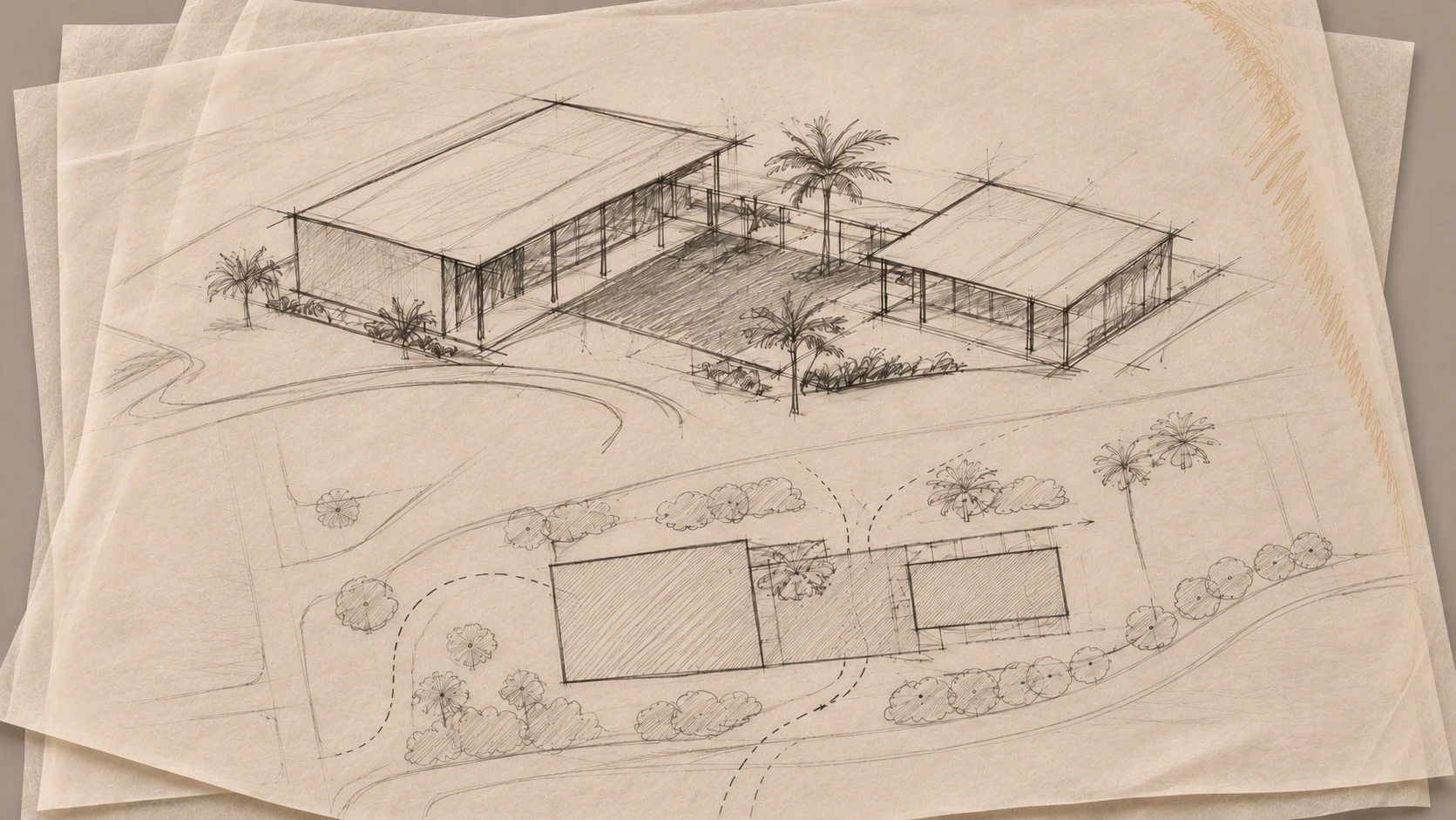
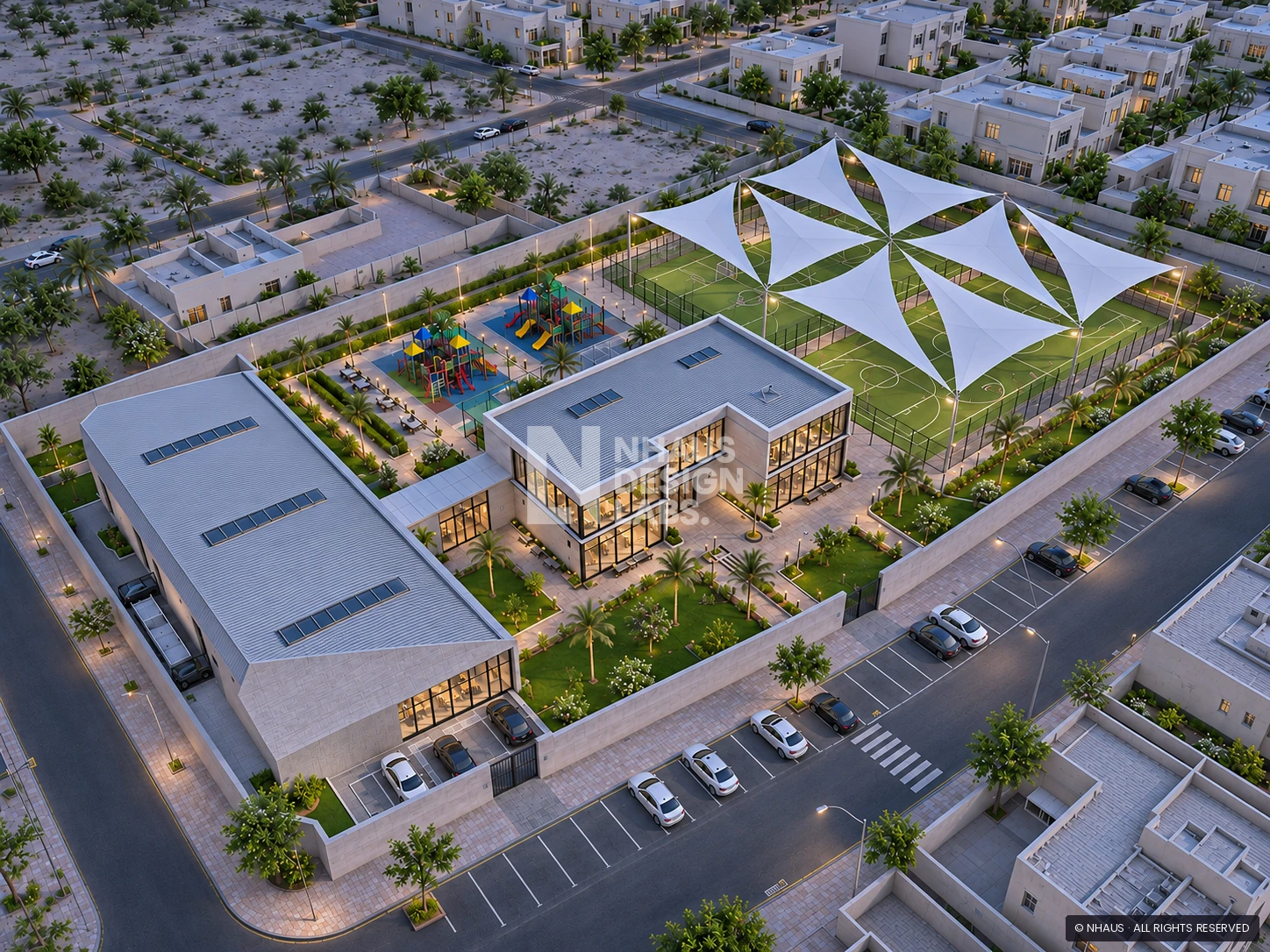
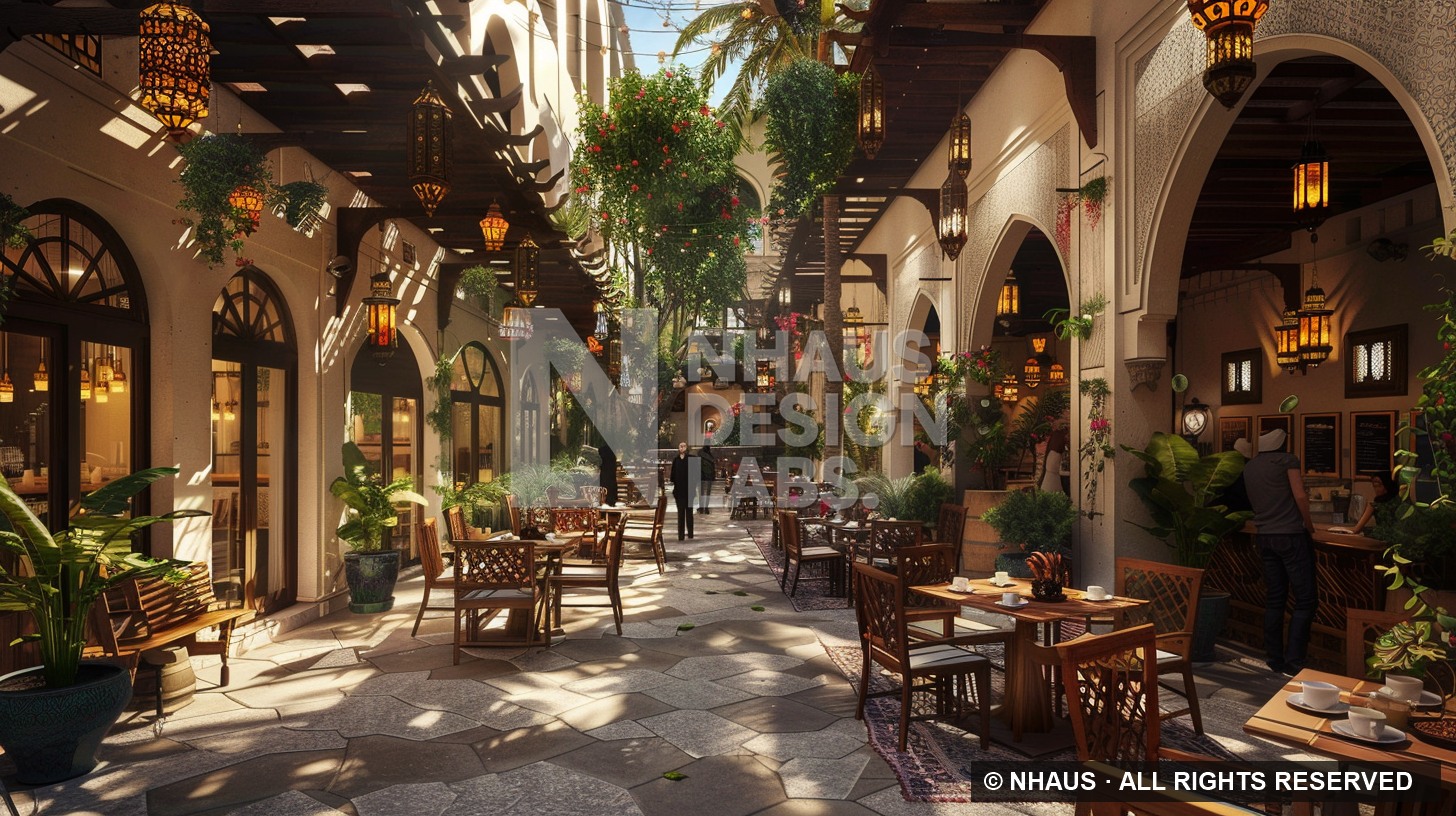
In the Courtyard Souq concept, the covered arcade gives the shops a sheltered address, while café tables and planting give the courtyard a reason to stay. Read together, the two studies ask a useful design question: how much of the destination should you see from the shade of the passage?
That moment is worth designing in plan and section. An opening can frame a view of a tree or a lively corner without revealing the whole courtyard at once. The next step should feel obvious even without a sign.
Make room at the edges
The courtyard has to work for someone crossing it in a hurry and for someone settling in for a coffee. Set tables and benches back from the main walk so neither gets in the other’s way. An edge seat can look onto the activity without putting its occupant in the middle of it.
Draw the shade with the route
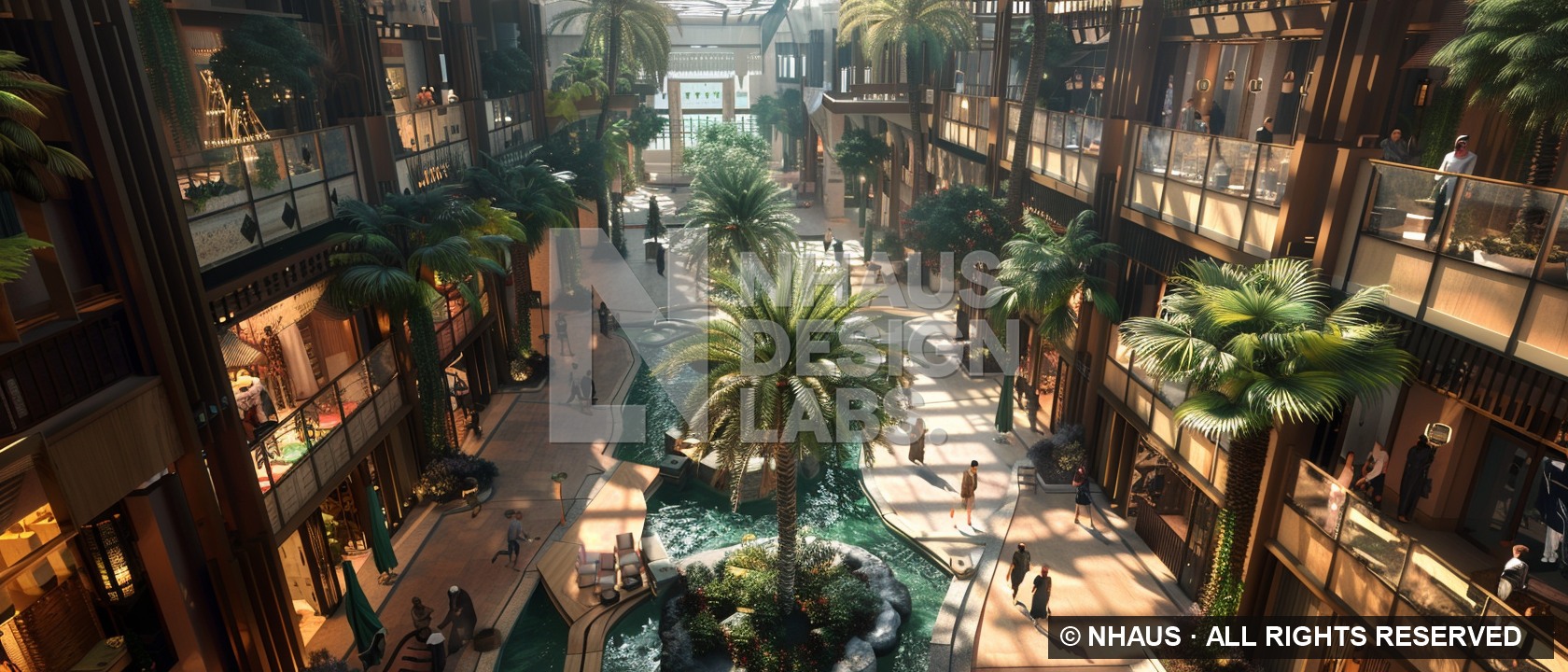
A café table and a shaded bench serve different reasons to stay. Where they sit matters more than how many of them fit on the drawing. Test the route at the times people are likely to use it, and check that the spots to pause still feel inviting when the sun moves.
We’d test the courtyard and arcade together: can you cross easily, find a seat without buying anything, and see where to go next? If those three things work, the shops and café can add life without having to carry the whole experience.