
Begin with what people need to see
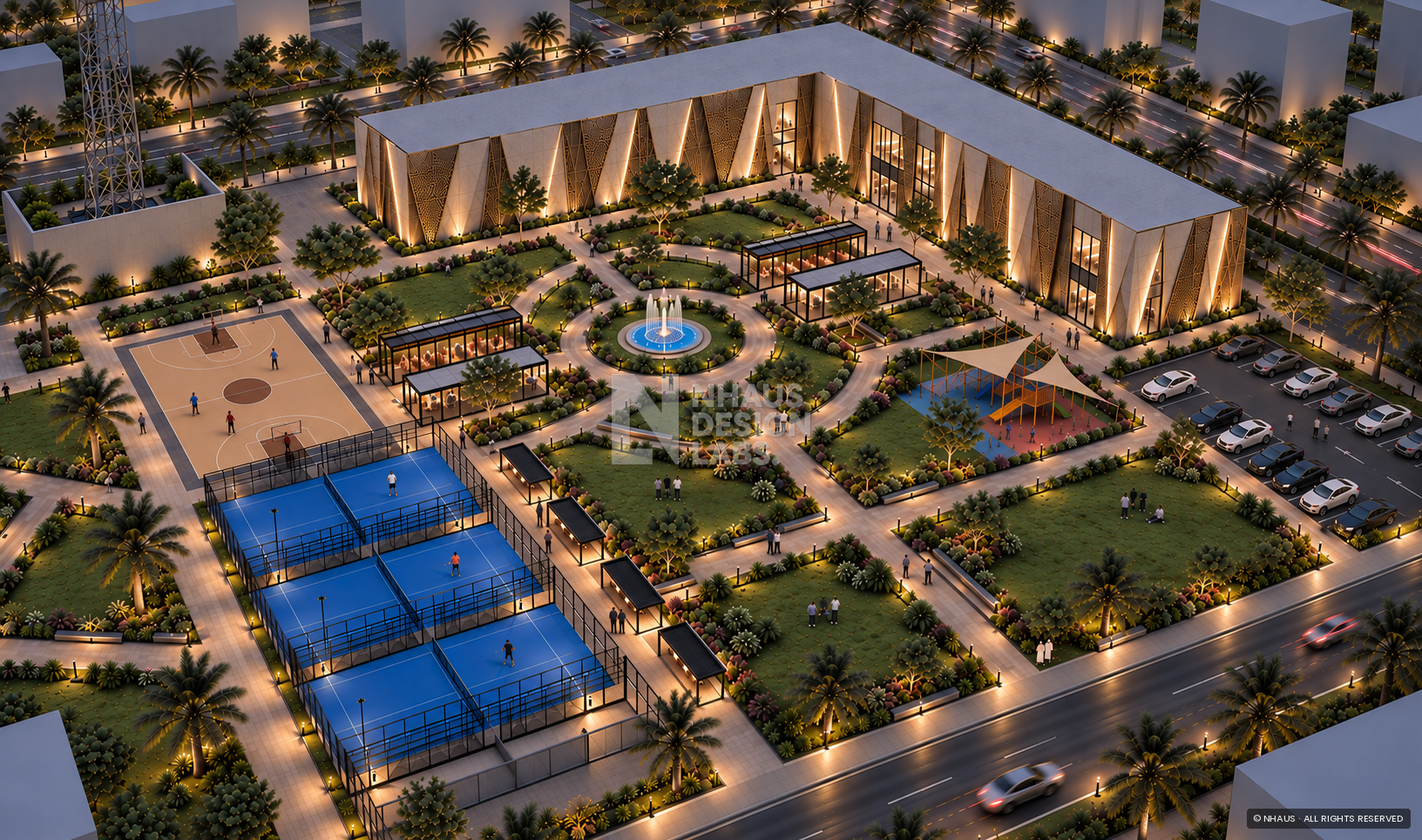
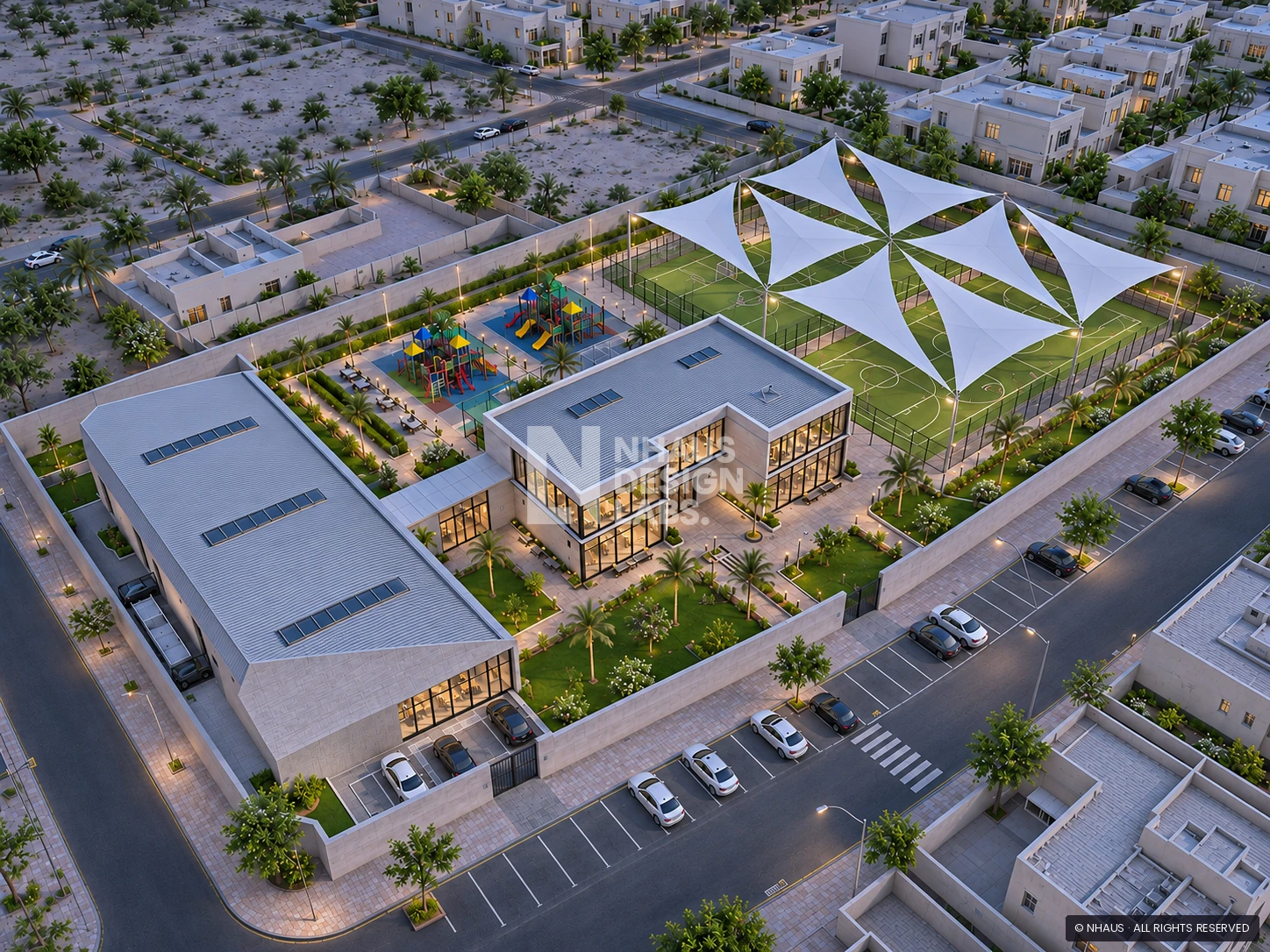
The evening experience is not simply the daytime scene with the lights switched on. Contrast changes. Glazing reveals interiors. Paths, thresholds and the edges of a building can become more or less legible.
A useful starting point is the visitor’s journey: arriving, finding an entrance, moving between activities and leaving. Lighting should help people understand that sequence. The brightest element does not always need to be the largest surface; it may be the doorway or the next point along a route.
Let the building reveal its life
Warm interior light can give depth to a façade and make the relationship between inside and outside more apparent. A visible lobby, lounge or activity space can communicate use more naturally than lighting every elevation with equal intensity.
At Al Shamkha Integrated Fitness, the daylight study lets the pale walls and shaded glazing define the entrance. In the dusk version, light from the lobby makes the doorway easier to pick out, while low lights trace the path along the lawn.
These images explore a design intention. They do not represent a final engineered lighting scheme or verified illumination levels. Detailed coordination is needed to translate an atmosphere into an appropriate technical solution.
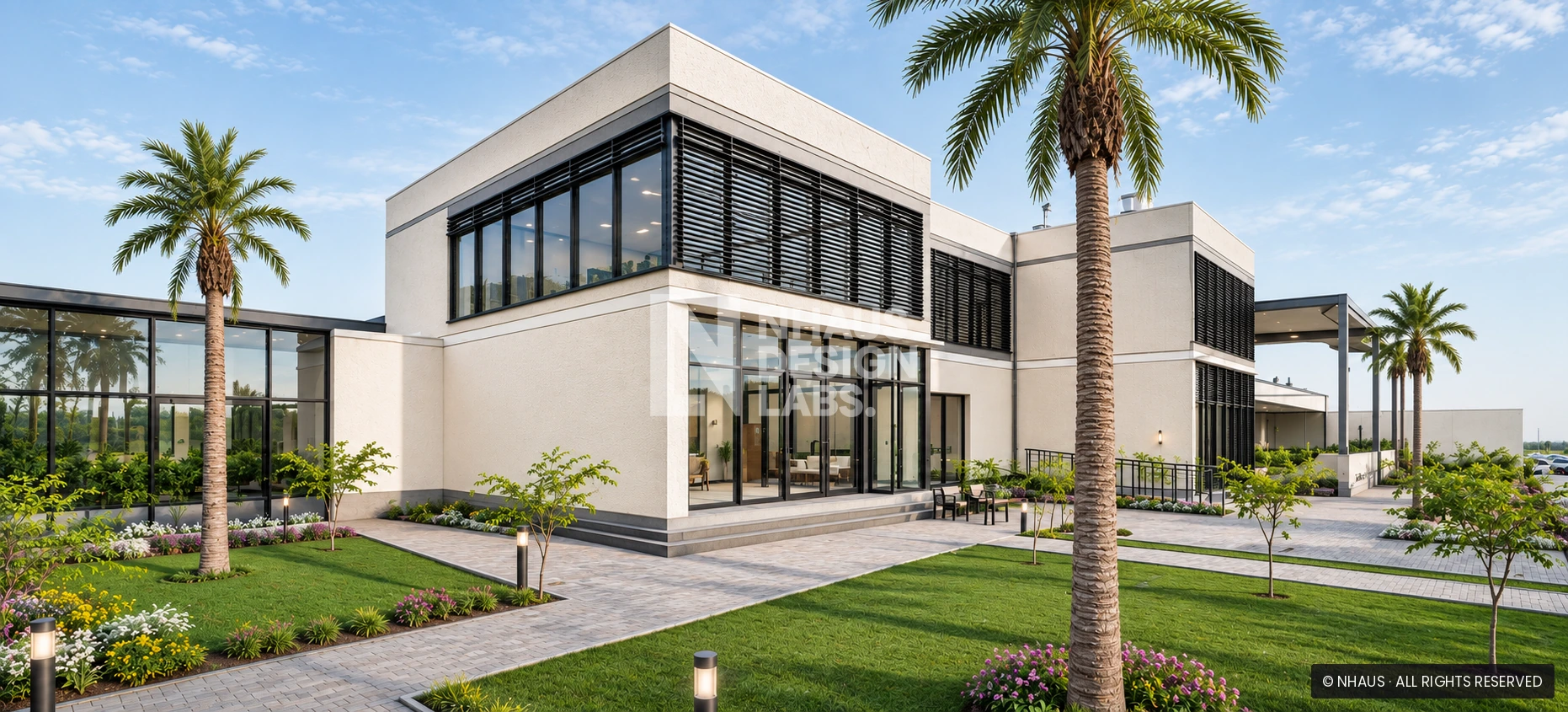
The same Al Shamkha entrance study, shown in daylight and at dusk.
Use restraint to create hierarchy
Not every tree, wall or path needs to become a feature. A coherent evening scene depends on selecting what to emphasise and what can remain quieter. Too many competing highlights can make a place feel visually busy.
The balance should also respond to neighbouring properties, views and the different needs of each activity. A sports area, a pedestrian path and a social terrace require different decisions. Glare, spill light, controls and maintenance all belong in the detailed conversation.
Design for more than one moment
A destination may host an active early evening and a quieter period later at night. Planning how lighting can respond to those conditions helps connect the visual concept with daily operation.
The best evening atmosphere is purposeful rather than theatrical. It makes the place understandable, gives the architecture depth and supports the activities it contains, while allowing darkness to remain part of the composition.